What is Fe 550D TMT steel?
Fe 550D is a quenched and self-tempered TMT reinforcement bar. It has the same yield strength as Fe 550, a minimum of 550 N/mm², but it is made to stretch much further before it breaks. IS 1786:2008 sets its minimum elongation at 14.5%, the highest of the three grades we make.
The “D” stands for ductility
- Fe 550 is a strength grade. It yields at 550 N/mm² and carries heavy loads well.
- Fe 550D has the same strength plus a large ductility margin. It stretches to 14.5% before it fails, and its chemistry is tighter.
In plain terms, an Fe 550D bar bends, yields and absorbs a lot of energy before it snaps. A less ductile bar can fail more suddenly. In a structure that has to come through an earthquake, that margin between “bends” and “snaps” is what the design is counting on.
Fe 550D TMT bar specifications
RD TMT Fe 550D bars are made to IS 1786:2008 and carry the BIS ISI mark under licence CM/L-6200193709. These are the values a designer works from.
| Mechanical | |
|---|---|
| Yield strength | 550 N/mm² min |
| Elongation | 14.5% min |
| UTS / YS ratio | 1.08 min |
| Chemistry | |
| Carbon | 0.25% max |
| Sulphur | 0.040% max |
| Phosphorus | 0.040% max |
| Sulphur + phosphorus | 0.075% max |
| Supply | |
| Standard | IS 1786:2008 |
| Diameters | 8, 10, 12, 16, 20, 25, 32 mm |
| Length | 12 m standard |
The chemistry is part of the “D”. Fe 550D allows less carbon, sulphur and phosphorus than Fe 500 or Fe 550. Lower carbon keeps the bar weldable on site. Lower sulphur and phosphorus improve ductility and cut the risk of brittle fracture, which is what a seismic structure needs.
Fe 550D vs Fe 500 vs Fe 550
The three grades we make are for different jobs. Here they are side by side.
| Grade | Yield min | Elongation min | UTS/YS | Typical use |
|---|---|---|---|---|
| Fe 500 | 500 N/mm² | 12% | ≥ 1.08 | Houses, apartments, general RCC |
| Fe 550 | 550 N/mm² | 10% | ≥ 1.06 | High-rise, heavy load, government works |
| Fe 550DThis page | 550 N/mm² | 14.5% | ≥ 1.08 | Seismic zones, ductile detailing, infrastructure |
The UTS/YS ratio matters too. A higher ratio means the bar keeps gaining strength after it starts to yield, so it can absorb more energy. Fe 550D’s minimum ratio of 1.08, with its 14.5% elongation, makes it the most ductile grade in the RD TMT range. Fe 550D also caps sulphur and phosphorus together at 0.075%, against 0.105% for Fe 500 TMT bars.
Sizes and weights
Fe 550D comes in the full size range, in 12 m standard length. The weight per metre is the number a bar bending schedule is priced on.
| Size | Weight per metre | Typical use |
|---|---|---|
| 8 mm | 0.395 kg/m | Ties and stirrups |
| 10 mm | 0.617 kg/m | Slabs |
| 12 mm | 0.888 kg/m | Beams and slabs |
| 16 mm | 1.580 kg/m | Beams and columns |
| 20 mm | 2.470 kg/m | Columns |
| 25 mm | 3.850 kg/m | Footings |
| 32 mm | 6.310 kg/m | Heavy structures |
Send our team your bar bending schedule and we will price it. See all grades and sizes.
How RD TMT makes Fe 550D bars
Quenched and self-tempered
RD TMT is a TMT mill. The hot bar is rolled to size, then quenched with water as it leaves the mill. The outer layer cools fast and forms a hard skin. The core cools more slowly and stays softer and more ductile, and its heat tempers the outer layer from the inside.
That balance of a hard skin over a ductile core is what lets one bar hold a high yield strength and still stretch to 14.5%. Cold-twisted bars get their strength by twisting, which uses up most of their ductility, so TMT is the standard for serious structural work.
Every dispatch tested, every bar traceable
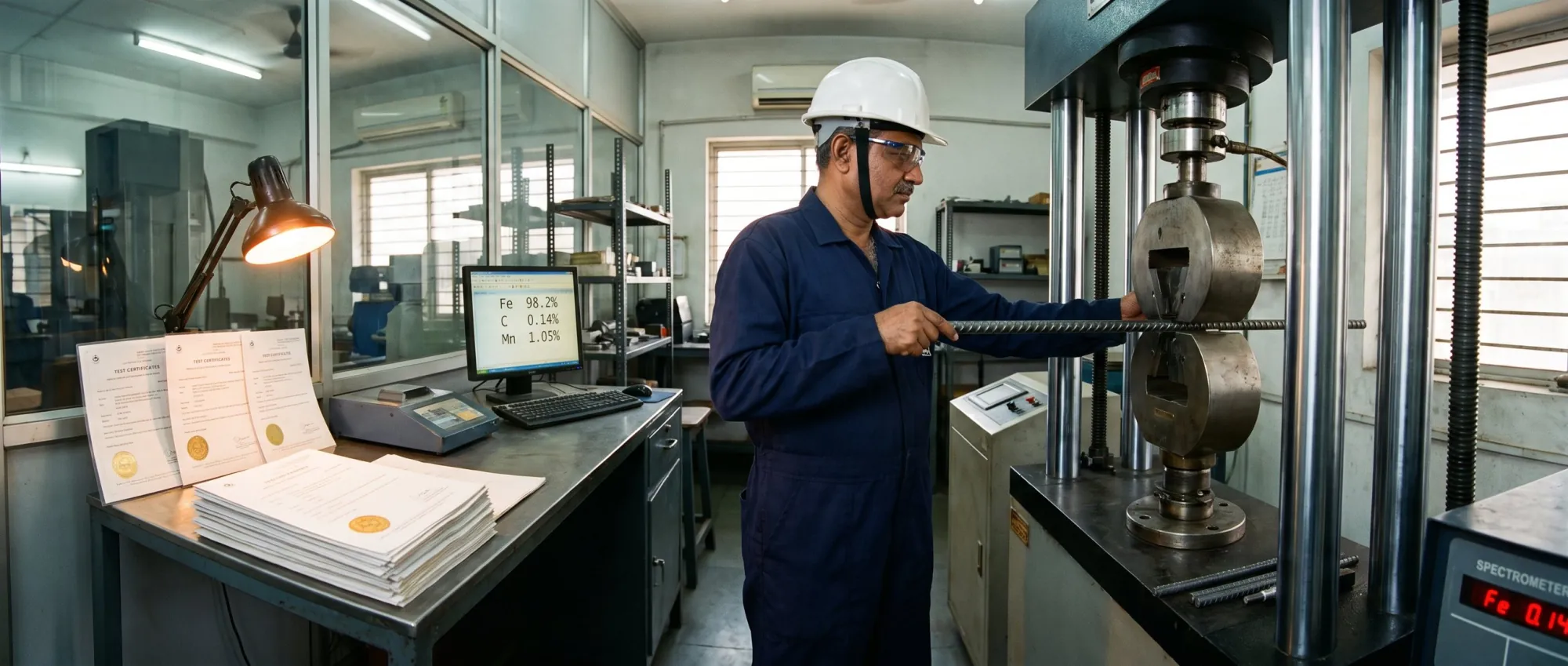
Every lot of Fe 550D is tested in our in-house lab, NABL accredited to ISO/IEC 17025:2017. Each dispatch leaves with a test certificate tied to the heat number, so a site engineer can match the bars on the ground to the lab results.
That matters most on high-stakes work. When a consultant or an inspector asks for proof that the Fe 550D in a seismic structure is the real grade, the answer is a certificate tied to a specific heat. Read how we make our bars, or open our certifications.
- NABL lab accreditation
- NABLT0826KA18884
- BIS licence, IS 1786
- CM/L-6200193709
- On every dispatch
- Heat number to test certificate
Why ductility matters
What happens in an earthquake
An earthquake makes a building sway, and the sway puts the most stress on beam-column joints and corners. A structure designed for seismic loads relies on its steel to yield and deform, using up the energy through controlled bending instead of failing in a sudden break.
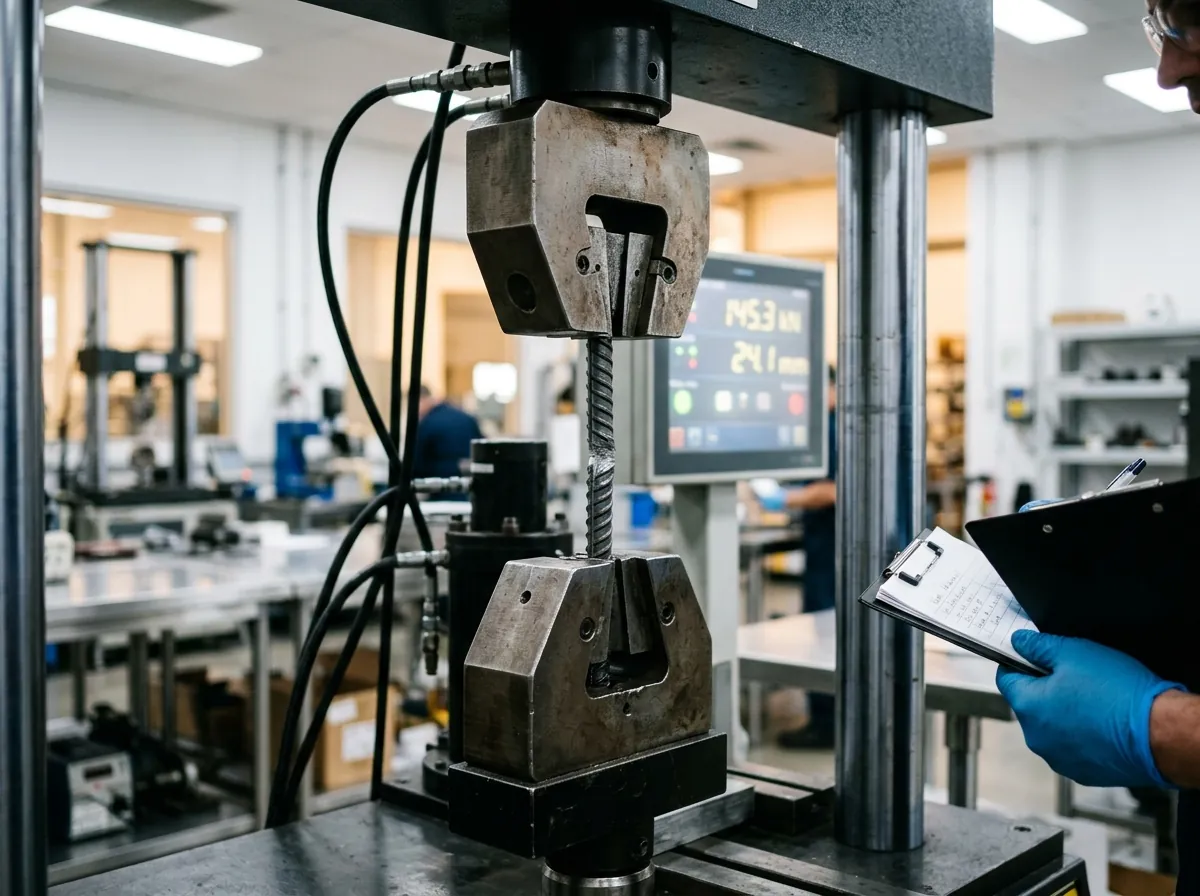
Fe 550D is specified for exactly this. Its 14.5% elongation lets the bar take large, repeated deformations and still hold. In ductile detailing, the close ties, lap lengths and joint steel that seismic codes require, Fe 550D is the grade that behaves the way the detailing intends.
The bend and rebend test
IS 1786:2008 requires a bend and rebend test in every size, from 8 mm to 32 mm. The bar is bent to a set angle, then bent back, and it must show no cracks on the bent surface. It is the simplest, most direct demonstration of the “D”: the bar bends, it rebends, and it does not crack.
Where Fe 550D bars are used
Seismic zone construction
Fe 550D is a common specification for buildings in higher seismic zones, where codes demand ductile detailing. If the project sits in a seismic zone and the drawing calls for a ductile grade, Fe 550D is the answer. Do not substitute Fe 550 for it.
Infrastructure and heavy structures
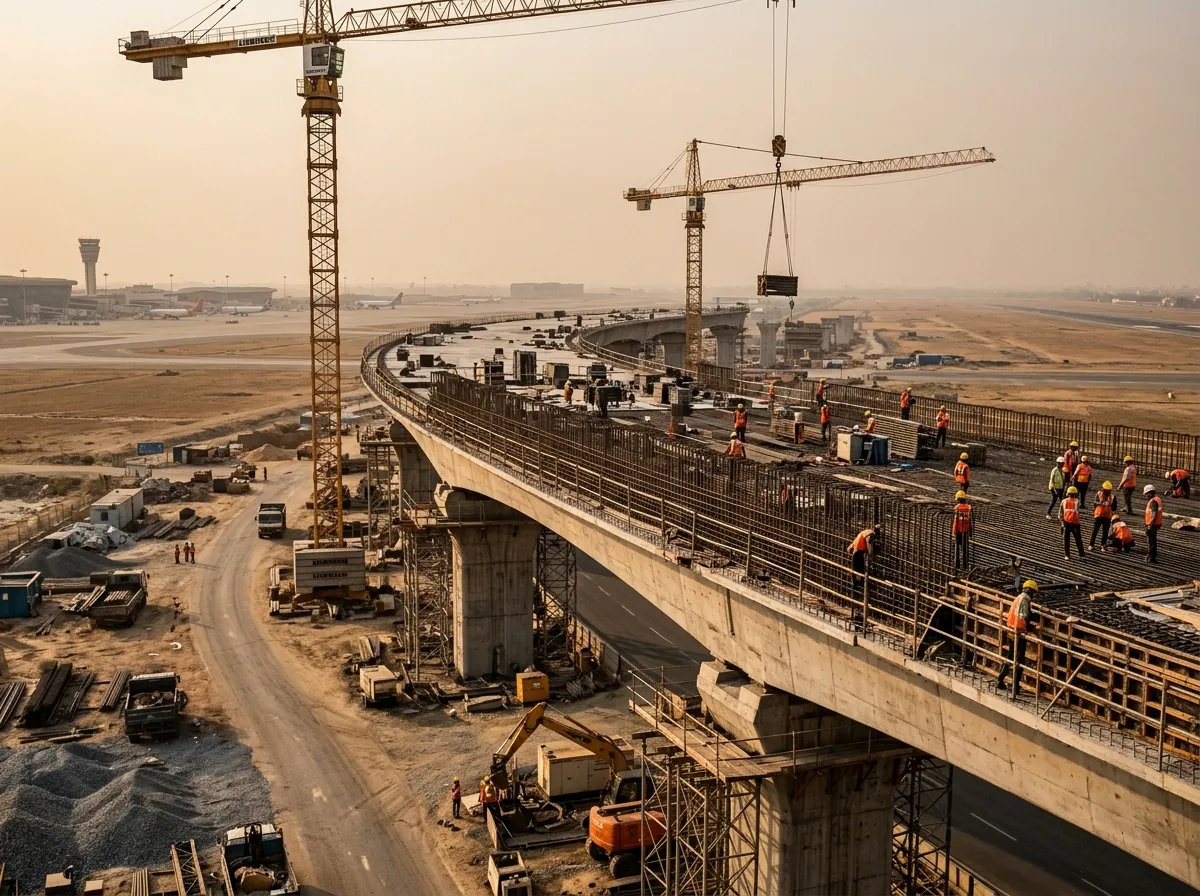
Bridges, flyovers, retaining walls and other heavy structures carry high and repeated loads. Fe 550D’s mix of 550 N/mm² strength and high ductility suits that work. It is the grade RD TMT lists for infrastructure.
High-rise and housing
Taller buildings also gain from the ductility margin. Engineers use Fe 550D alongside Fe 550 in high-rise and housing projects, where they want the extra margin on critical elements such as columns and beam-column joints.
Buying Fe 550D TMT bars in Bengaluru and Karnataka
RD TMT supplies Fe 550D bars to builders, contractors, consultants and dealers across Karnataka and South India. Our plant is at Somanahalli, Mandya, on the Bengaluru–Mysuru corridor. Our registered office is in HSR Layout, Bengaluru.
- Approved by BDA
- The Bangalore Development Authority has approved RD TMT Fe 550 and Fe 550D bars for its housing projects. That matters where a project must use a listed brand.
- One standard, one source
- We make and test the steel ourselves. The bar that leaves our plant is the bar our lab certified, with the heat number to prove it.
Price depends on size, quantity and the current market rate. For a project-specific quote on Fe 550D, get in touch with our team. See the projects we supply.
A simple Fe 550D bar checklist for site engineers
Before the bars go into a seismic or heavy structure, check these six things at the gate. This does not replace your test certificate.
- Check the grade on the tag.
The bundle tag names the grade. Check it says Fe 550D and matches your drawing. Do not accept Fe 550 in its place.
- Look for the name and the ISI mark.
Every RD TMT bar carries the RD TMT name and the ISI mark. Our BIS licence is CM/L-6200193709.
- Match the test certificate.
Every dispatch carries a NABL lab test certificate. Match its heat number to the bundle tag, and check the elongation reads 14.5% or more.
- Check the ribs.
The rib pattern should be the same in pitch and height along the bar, so the grip on the concrete is the same throughout.
- Check straightness.
Bars should be straight and free of kinks and twists before they go into a cage.
- Check the size.
Confirm each diameter matches the bar bending schedule. A wrong size changes the steel area the design relies on.
If a bundle fails any of these, it does not belong in a structure that relies on ductility. Stop and ask.
Frequently asked questions
What is an Fe 550D TMT bar?
Fe 550D is a TMT reinforcement bar with a minimum yield strength of 550 N/mm² and a minimum elongation of 14.5%, made to IS 1786:2008. It is the most ductile grade RD TMT makes.
What does the "D" in Fe 550D mean?
The D stands for ductility. The bar stretches more before it breaks, which is what seismic design and ductile detailing ask of the steel.
What is the difference between Fe 550 and Fe 550D?
Both yield at 550 N/mm². Fe 550 has a minimum elongation of 10%; Fe 550D has 14.5%, a higher UTS/YS ratio and lower sulphur and phosphorus. Fe 550D is the grade for seismic and infrastructure work.
Is Fe 550D good for earthquake zones?
Yes. Its ductility lets the bar yield and bend under repeated load instead of snapping, which is why engineers specify it for ductile detailing in seismic zones.
What sizes does Fe 550D come in?
We supply Fe 550D in 8, 10, 12, 16, 20, 25 and 32 mm, in 12 m standard length.
Is RD TMT's Fe 550D BIS certified?
Yes. Our Fe 550D bars are made to IS 1786:2008 and carry the ISI mark under BIS licence CM/L-6200193709, with a NABL lab test certificate on every dispatch.
What is the price of Fe 550D TMT bars in Bengaluru?
Price depends on the size, the quantity and the current market rate. Share your requirement and we will give you a current quote.
Is Fe 550D approved for government projects?
The Bangalore Development Authority has approved RD TMT Fe 550 and Fe 550D bars for its housing projects. For other government works, ask our team which approvals apply.
How do I know the Fe 550D bar is genuine?
Check the RD TMT name and the ISI mark on the bar, check the grade on the bundle tag, and match the heat number on the tag to its NABL lab test certificate.
How do I get a quote for Fe 550D TMT bars?
Send us the sizes, quantity and delivery location, or your bar bending schedule. Our sales team will price it within one business day.