What is an MS billet?
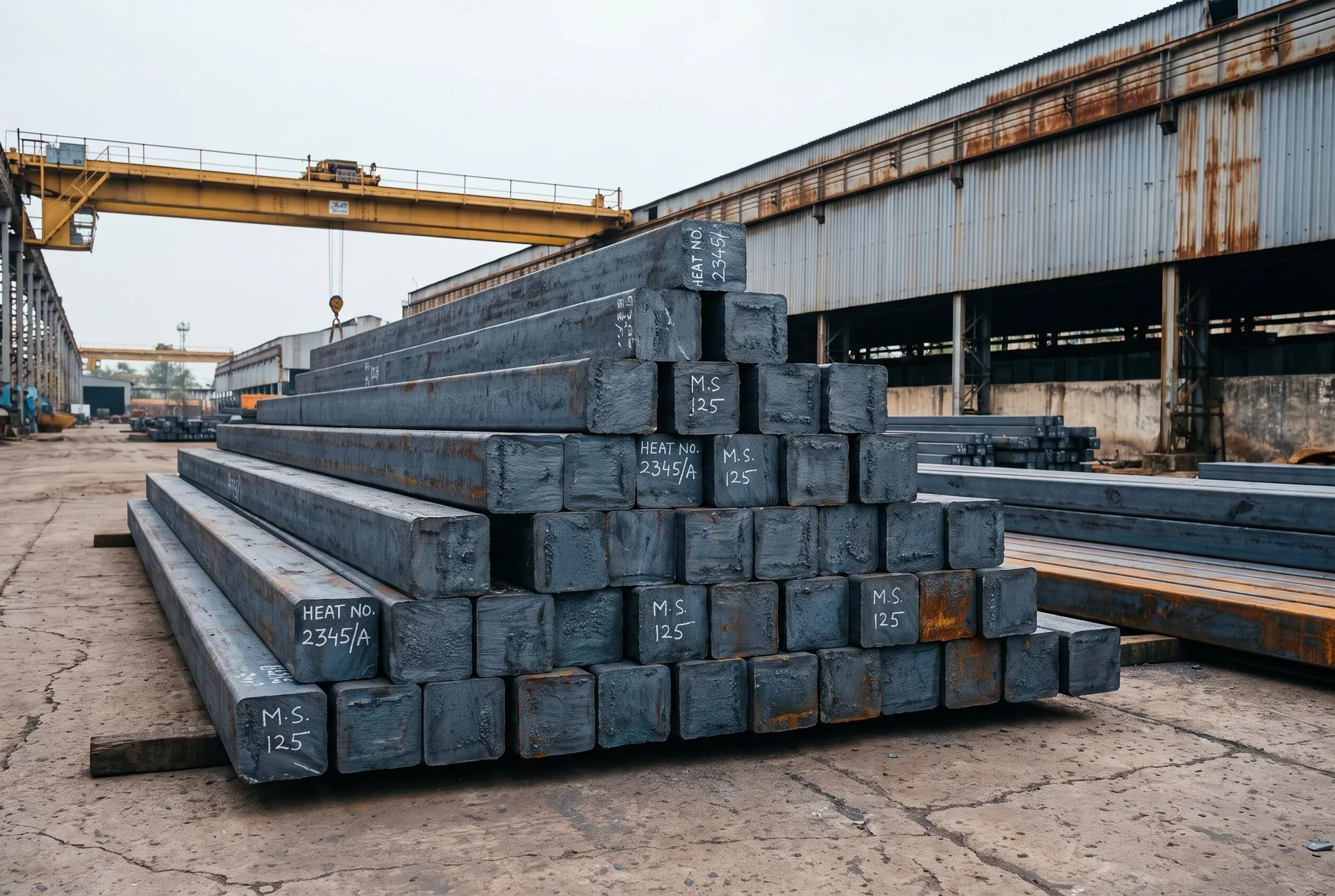
An MS billet is a semi-finished mild steel product with a square cross-section. It is not the end product. A rolling mill reheats it and rolls it into TMT bars, angles, channels, flats and other sections.
The process decides the quality
Two billets can look the same on the surface and roll very differently. Three things decide how a billet behaves in the mill.
- Chemistry. Carbon and manganese drive strength. Sulphur and phosphorus cause brittleness.
- Casting route. How the billet was cast affects its internal soundness and how evenly it rolls. Ask your supplier how theirs are cast.
- Consistency. A nominal specification is one thing. A batch that holds it, heat after heat, is what protects the mill’s own output.
A well-controlled billet rolls cleanly and gives a consistent finished product. A poorly controlled one can fail in the mill, and the failure traces straight back to the feedstock.
MS billet specifications
| Standard | |
|---|---|
| Standard | IS 14650:1999 |
| BIS licence | CM/L-6200193608 |
| Product | Steel billets for re-rolling |
| Supply | |
| Sections | 100, 110, 125 and 150 mm square |
| Lengths | 6 m and 12 m |
| Raw material | DRI and selected scrap |
| Testing | |
| Chemistry | Spectrometer check, every heat |
| Marking | Heat number on the billet |
Sizes and weights
| Section | Weight per metre | Per 6 m billet | Per 12 m billet |
|---|---|---|---|
| 100 × 100 mm | 78.5 kg/m | 471 kg | 942 kg |
| 110 × 110 mm | 95.0 kg/m | 570 kg | 1,140 kg |
| 125 × 125 mm | 122.7 kg/m | 736 kg | 1,472 kg |
| 150 × 150 mm | 176.6 kg/m | 1,060 kg | 2,120 kg |
The section you choose depends on your mill’s reheating furnace and the products you roll. Tell us your mill and your finished grade, and we will advise on the section.
How RD TMT makes MS billets
Melted and cast in our own plant
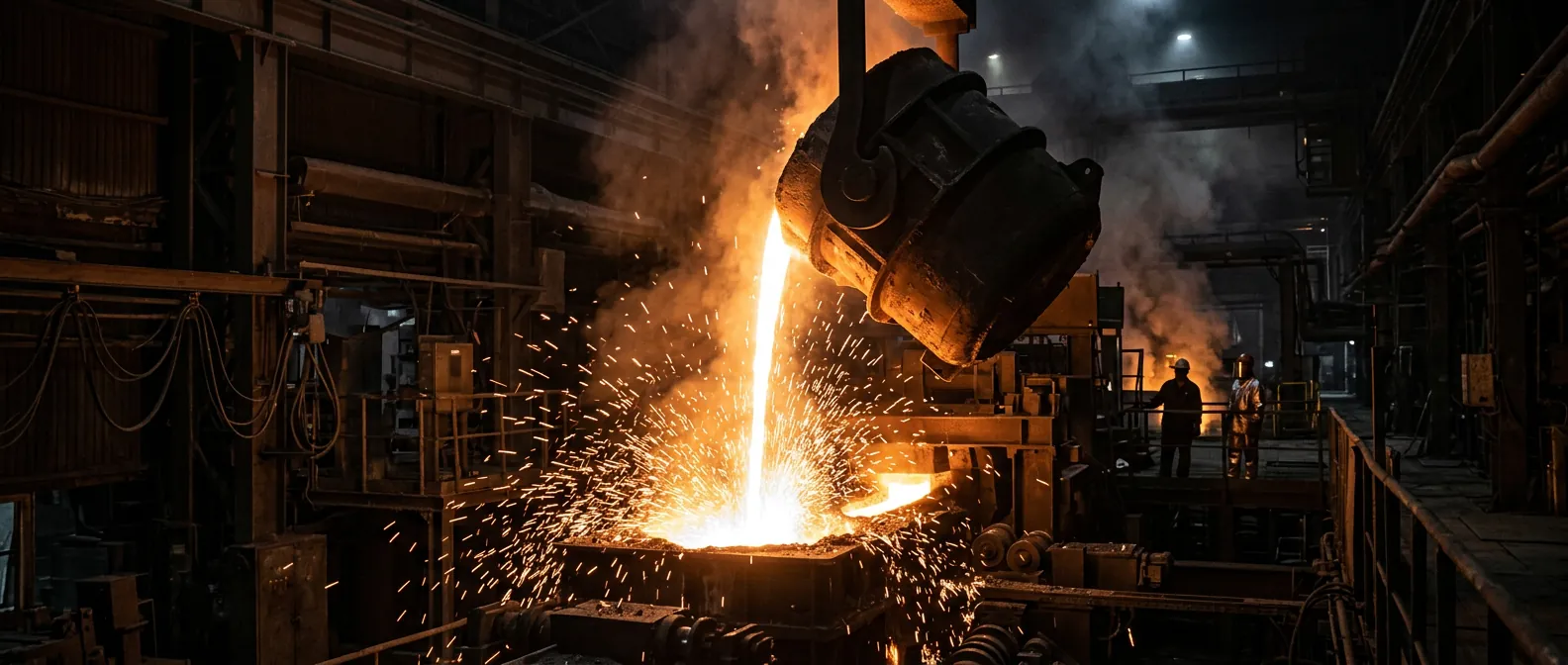
We melt DRI and selected scrap, cast the steel into square billets and stamp each with its heat number. The same billets feed our own TEMPCORE rolling lines, so the chemistry we hold for our TMT bars is the chemistry we hold for the billets we sell.
Every heat checked, every billet traceable
Every heat is checked on a spectrometer before it is cut. Our in-house lab is NABL accredited to ISO/IEC 17025:2017 (NABLT0826KA18884). The heat number on each billet links it to its chemistry, so a mill buyer can match the billets in the yard to the analysis.
Why billet quality matters
What happens when the chemistry is off
A billet with high sulphur or phosphorus does not just make a lower-grade bar; it can fail in the mill. High sulphur causes hot-shortness, so cracks appear during rolling. High phosphorus causes cold-shortness, so the finished bar is brittle. Both trace back to the billet, and neither can be fixed downstream.
The chemical analysis
The heat analysis is the most useful document in a billet deal. It lists the carbon, manganese, sulphur, phosphorus and other elements that decide how the steel behaves. A reliable supplier has it on file for every heat and shares it without hesitation.
Where MS billets are used
- Rolling mills and re-rollers that roll TMT bars, angles, channels and flats.
- Structural and fabrication businesses that roll their own sections.
- Dealers and stockists who supply re-rollers across the region.
Buying MS billets in Bengaluru and Karnataka
RD TMT supplies MS billets to re-rollers, fabricators and dealers across Karnataka and South India from our plant at Somanahalli, Mandya, with our registered office in HSR Layout, Bengaluru.
Price depends on section, quantity and the current market rate. See the full product range and our certifications, or contact our team for a quote.
A simple MS billet checklist for mill buyers
Before the billets go into a furnace, check these five things.
- Ask for the heat analysis.
Check the carbon, manganese, sulphur and phosphorus against what your finished grade needs.
- Match the heat number.
Each billet carries a heat number that links to its analysis. Match the numbers.
- Check the surface.
Billets should be free of cracks, seams and heavy scale.
- Look at the cut ends.
A clean, square cut end tells you about the internal soundness.
- Check the weight.
The weight per metre should match the theoretical weight for the section.
If a batch fails any of these, it does not belong in a mill that relies on consistent feedstock.
Frequently asked questions
What is an MS billet?
A mild steel billet is a semi-finished steel product with a square cross-section, cast and then used as feedstock by rolling mills to make TMT bars, angles, channels and other sections.
What standard are RD TMT billets made to?
IS 14650:1999, under BIS licence CM/L-6200193608.
What sizes do RD TMT billets come in?
100, 110, 125 and 150 mm square sections, in 6 m and 12 m lengths.
What does the chemistry in a billet decide?
The grade a mill can roll from it. Carbon and manganese drive strength, while sulphur and phosphorus cause brittleness. Controlled chemistry is what lets a mill roll a consistent product.
How is the chemistry checked?
Every heat is checked on a spectrometer before it is cut, and each billet carries its heat number so it can be matched to the analysis.
What is the price of MS billets in Bengaluru?
Price depends on section, quantity and the current market rate. Contact our team for a quote.
How do I know the billets are what I ordered?
Check the heat number on the billet and match it to the heat analysis.
How do I get a quote?
Send the section, quantity and delivery location, and our team will prepare a quote within one business day.