Where TMT bars go in a building
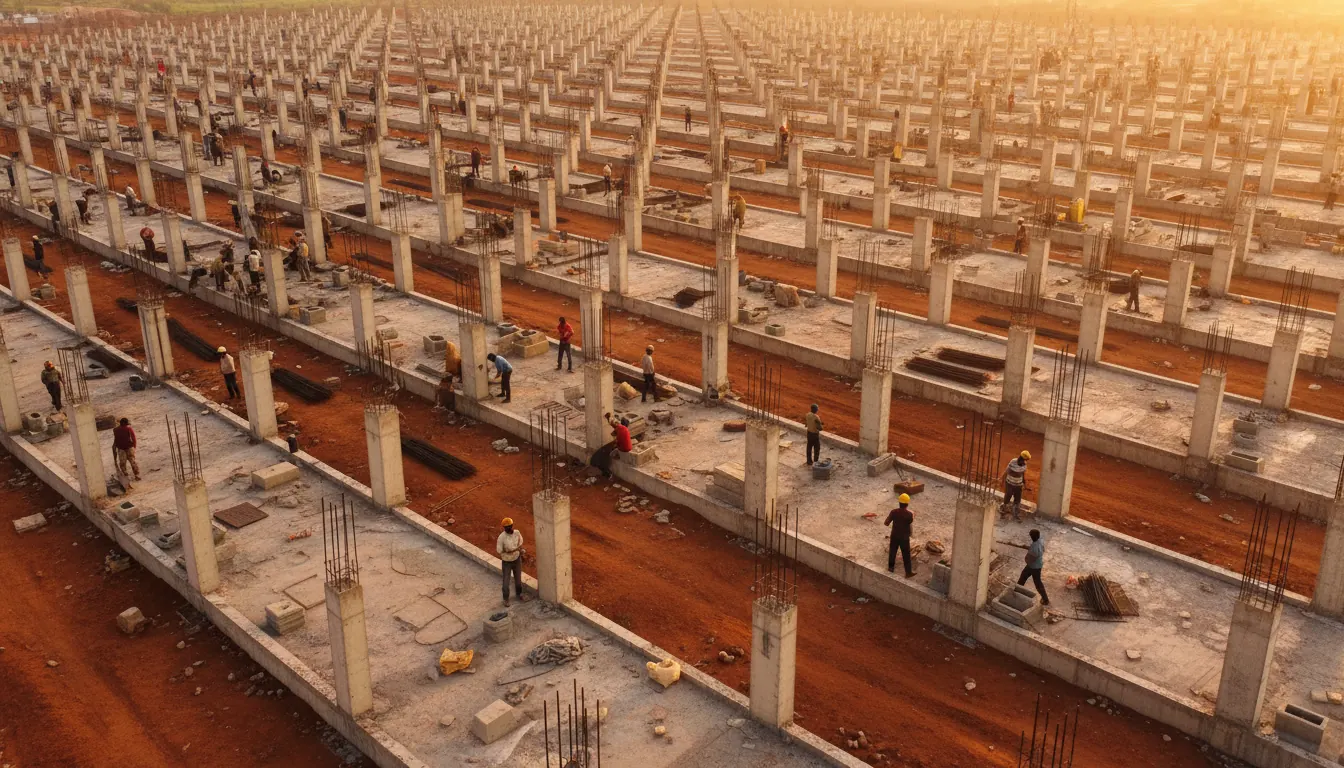
Reinforcement is split by member type, and each type takes a different size range. In a typical mid-rise building, foundations and slabs carry the largest share of the steel tonnage, so the size and grade decisions here drive the steel cost more than almost anything else.
- Foundations
- 12–25 mm
- Slabs
- 8–12 mm
- Long-span slabs
- 16 mm
- Beams, columns
- 16–32 mm
If your project mixes all three, the size mix matters as much as the grade. That is where a bar bending schedule pays for itself, and where a supplier who prices against your schedule saves a week of back and forth.
Choosing TMT bars for slabs
Slab steel is where most projects overbuy or underbuy. The drawing rules, but designs usually start from a set of practical defaults.
Match bar size to slab thickness
| Slab thickness | Typical bar | Spacing (c/c) | Typical use |
|---|---|---|---|
| 100 mm (4 in) | 8 mm | 150–175 mm | Residential slabs, short spans |
| 125 mm (5 in) | 10 mm | 150–175 mm | Apartments, commercial slabs |
| 150 mm (6 in) | 10–12 mm | 150 mm | Longer spans, heavier floors |
| 180–200 mm (7–8 in) | 12–16 mm | 150 mm | Cantilevers, long spans, flat slabs |
A 150 mm slab with a long span or a heavy live load can still call for 12 mm or 16 mm. Follow the drawing.
Minimum steel and spacing per IS 456
- Minimum steel: 0.12% of the gross cross-section for high strength deformed bars. For a 100 mm slab that is 120 mm² per metre width. An 8 mm bar at 150 mm c/c gives about 335 mm² per metre, which is why it is the usual default for a 4-inch slab.
- Maximum spacing, main bars: 3 times the slab thickness or 300 mm, whichever is less.
- Distribution steel: also at least 0.12% of the gross area, spaced at no more than 5 times the thickness or 450 mm. It keeps the slab from cracking across its width.
Two site tips. Use one size for both directions where the design allows: fewer bundle types, less wastage, a simpler order. And order top bars over supports and bottom bars in the span as separate lines, so the bending schedule matches the pour.
Choosing TMT bars for foundations
Isolated footings, strip footings and rafts
- Isolated footings under columns: 12 to 25 mm, main bars both ways. Small house footings start at 12 mm; heavily loaded column footings go to 20 and 25 mm.
- Strip footings under walls: 12 to 16 mm, with distribution bars.
- Raft foundations: 12 to 25 mm both ways, in top and bottom layers. On a large project the raft is often the heaviest single steel item.
- Pile caps: 16 to 32 mm, with dowel bars for the columns.
Grade and cover for foundation steel
Foundation steel is the hardest steel in the building to replace. It is cast once, buried and never seen again. Two things protect it.
- Cover
- IS 456 sets at least 50 mm for footings. Many designs use 75 mm where concrete is cast directly against earth. Check the cover blocks on site, not just the drawing.
Fe 500 vs Fe 550 vs Fe 550D for RCC work
All three grades are made to IS 1786:2008, and RD TMT rolls all three. The difference is yield strength and ductility.
| Grade | Yield min | Elongation min | UTS/YS | Best for |
|---|---|---|---|---|
| Fe 500 | 500 N/mm² | 12% | ≥ 1.08 | Slabs, beams, columns, footings |
| Fe 550 | 550 N/mm² | 10% | ≥ 1.06 | Heavy-load slabs, high-rise, heavy footings |
| Fe 550D | 550 N/mm² | 14.5% | ≥ 1.08 | Seismic zones, ductile detailing, infrastructure |
The short version: Fe 500 is the mainstay for most slabs and foundations in Karnataka. Fe 550 is for when strength drives the design.
TMT bar sizes and weights
RD TMT rolls 8 mm to 32 mm in 12 m standard length. Weight per metre follows IS 1786 Table 1.
| Size | Weight per metre | Typical use |
|---|---|---|
| 8 mm | 0.395 kg/m | Ties, distribution steel, light slabs |
| 10 mm | 0.617 kg/m | Slabs |
| 12 mm | 0.888 kg/m | Beams, slabs, small footings |
| 16 mm | 1.580 kg/m | Beams, columns, rafts |
| 20 mm | 2.470 kg/m | Columns, heavy footings |
| 25 mm | 3.850 kg/m | Footings, pile caps |
| 32 mm | 6.310 kg/m | Heavy structures, infrastructure |
If you are pricing a slab, the 10 and 12 mm lines are usually most of the tonnage. If you are pricing a foundation, the 16 to 25 mm lines are.
Why TMT, not plain or cold-twisted bars
- Quenched and self-tempered. RD TMT rolls on German TEMPCORE lines. The water quench hardens the outer rim and the core stays tough, so the bar bends on site without cracking. That is what the IS 1786 bend and rebend test checks.
- Ribs that grip. The deformed ribs give the concrete its mechanical grip. A plain bar in a slab is a liability.
- A bar you can verify. Every bar carries the RD TMT name and the ISI mark under licence CM/L-6200193709, and the grade and heat number are on the bundle tag and the test certificate.
How RD TMT makes its TMT bars
Chemistry checked before casting
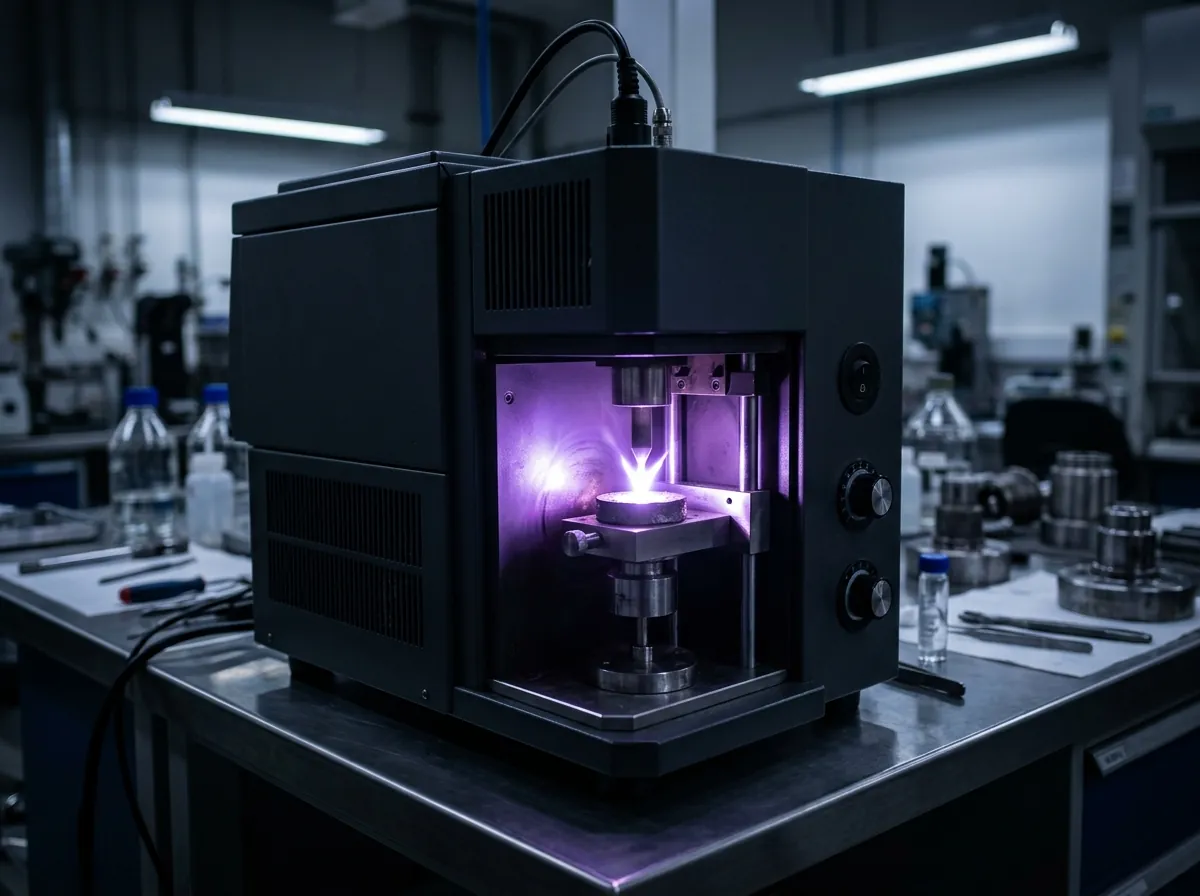
A sample from every heat goes to the spectrometer before it is cast. Carbon, sulphur and phosphorus must sit within the grade limit: for Fe 500, carbon 0.30% max, sulphur and phosphorus 0.055% each and 0.105% combined. Nothing is cast until the chemistry is right.
Every dispatch tested, every bar traceable
We test every batch in our NABL accredited lab (NABLT0826KA18884) for yield strength, tensile strength and elongation, then the bend and rebend test IS 1786 requires. Each dispatch leaves with a test certificate tied to the heat number on the bundle tag.
- NABL lab accreditation
- NABLT0826KA18884
- BIS licence, IS 1786
- CM/L-6200193709
- On every dispatch
- Heat number to test certificate
Buying TMT bars for slabs and foundations in Bengaluru and Karnataka
RD TMT supplies contractors, dealers, developers and government buyers across Karnataka, Tamil Nadu and Andhra Pradesh. Our plant is at Somanahalli, Mandya, on the Bengaluru–Mysuru corridor, about 80 km from the city, and our registered office is in HSR Layout, Bengaluru.
- Delivery to site across Peenya, Nelamangala, Bidadi, Harohalli and Bommasandra, the HSR–Sarjapur belt, and out to Mandya and Mysuru.
- Bar bending schedule pricing. Send the schedule and we price it by size and weight within one business day.
- Phased delivery around your pour schedule, so steel is on site when the concrete is.
- Dealer support for stockists across Karnataka.
For green building targets, our Fe 550 bars carry the CII GreenPro Ecolabel and RD TMT bars are rated 5-star Green Steel by the Ministry of Steel. See our certifications.
A simple checklist for site engineers
Run this before you accept a slab or foundation load.
- Check the grade on the tag.
It should read Fe 500 or Fe 550, as the drawing says.
- Check the ISI mark.
The ISI mark on the bar, and the licence number on the paperwork.
- Match the certificate.
The batch test certificate must match the heat number on the delivery.
- Check size and weight.
Verify the size and weight per metre against IS 1786 Table 1.
- Bend a sample.
Bend and rebend a sample bar. No cracks on the outside of the bend.
- Check cover and layout.
Cover blocks, spacing both ways, distribution steel and top bars over supports.
Frequently asked questions
What size TMT bar for a 4-inch (100 mm) slab?
8 mm at 150 to 175 mm c/c both ways is the usual default. The drawing rules if the span or load is unusual.
What size TMT bar for a 6-inch (150 mm) slab?
10 to 12 mm at about 150 mm c/c. Longer spans and heavier live loads push it to 12 or 16 mm.
Which grade for slabs and foundations, Fe 500 or Fe 550?
Fe 500 is the default for most residential and commercial slabs and footings. Fe 550 where the design calls for higher strength. Fe 550D where ductile detailing is specified.
What is the minimum steel in a slab per IS 456?
0.12% of the gross cross-sectional area for high strength deformed bars. For a 100 mm slab, that is 120 mm² per metre width.
What is the maximum spacing of TMT bars in a slab?
For main bars, 3 times the slab thickness or 300 mm, whichever is less, per IS 456. Distribution bars, 5 times the thickness or 450 mm.
What size TMT bars for footings?
12 to 25 mm depending on the footing size and the column load. Rafts take 12 to 25 mm both ways, top and bottom.
What concrete cover do slab and foundation bars need?
IS 456 sets nominal cover by exposure; 20 mm is common for slabs in mild exposure and at least 50 mm for footings. Many designs use 75 mm where concrete is cast against earth. Follow the drawing.
Can I use Fe 550 in slabs?
Yes. Its higher yield strength can cut the steel quantity where the design is based on it. Do not substitute a grade for price without the consultant’s sign-off.
How do I get a quote?
Send the grade, sizes, tonnage and site location, or your bar bending schedule. We quote within one business day.